
April 24, 2025
Richard Millington from FeverBee Community Consultants shares some very interesting observations on how the field of community management may have entered a “community recession.” He points to possible causes such as a shift to profitability, changing member behaviors, and the growing expectations around AI.
This rings especially true in the area of platform-based enterprise communities. However, there is a much richer landscape of community types and tools—of which he lists some compelling examples. “Communities for Good,” in particular, is of personal interest to me and still offers so many opportunities for community building and support. The key development to watch is the gradual shift in community work from platform-centric to audience-centric approaches—what Richard calls the COMMUNITY EVERYWHERE approach.
Increasingly, communities live and work across many different online and physical spaces. Rather than being confined to a particular tool or platform, with all their expense, gatekeeping, and technical limitations, we need to adopt a much looser, more socio-technical and ecological perspective of communities and the media they use. This means capturing the contours of community structures, practices, and technologies as they actually manifest in the messy world, rather than the rigid “ideal” structures and functionalities where community managers often try to confine them.
Community mapping is essential in this “sociotechnical exploration.” Once the big picture starts to shimmer through, collaborative sensemaking with community members can lead to new, grounded ideas for sensible community interventions. These could be another tool or functionality to add or use differently—but might also be something entirely non-technical, such as weaving new network connections or organizing a bridging, invigorating activity. One example that shows both the generative messiness and energizing potential of community mapping is the Tilburg Urban Farmers community we bootstrapped a decade ago
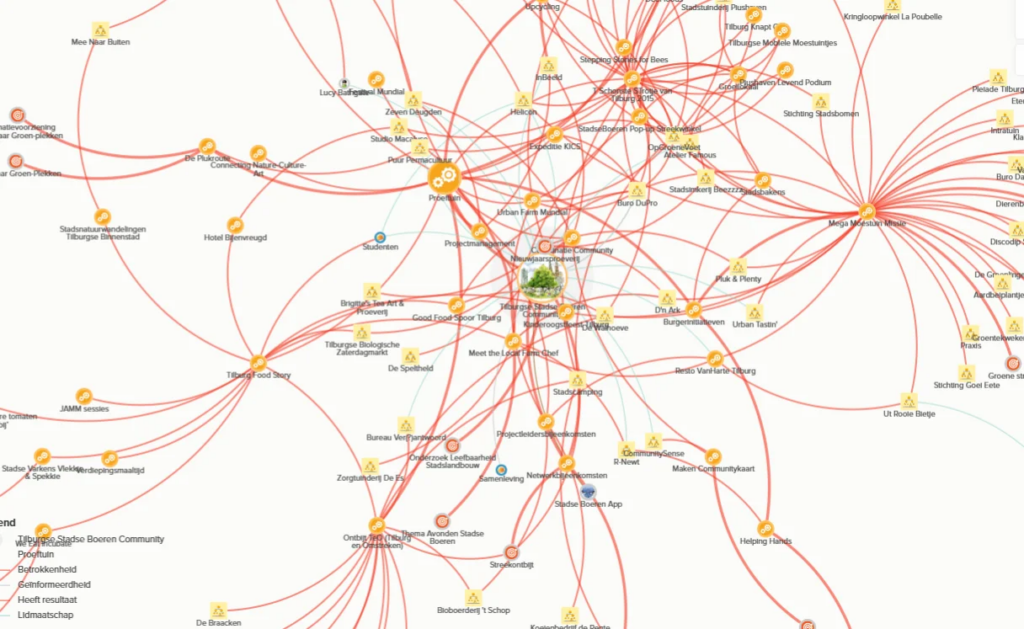
So yes, a community (platform) recession may be underway, but rather than signaling a crisis point for community management, I would argue that this is exactly what we needed. Freeing ourselves from restrictive platform shackles opens up so many exciting and innovative ways of growing, strengthening, and connecting communities. This may—and I believe will—unleash a resurgence of community building and engagement.
